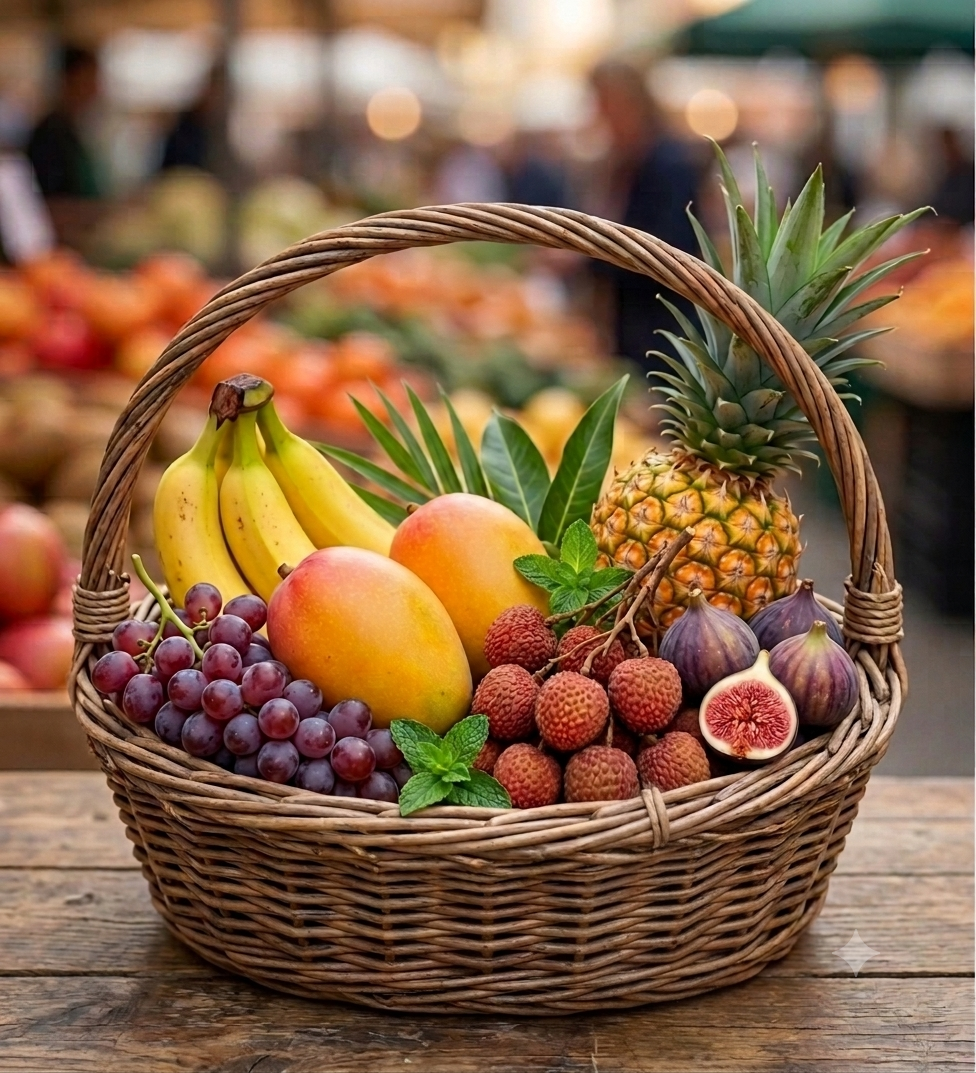
Fruits are incredibly beneficial for overall health, but many people avoid them to prevent weight gain and sudden blood sugar spikes. Those managing diabetes or focusing on healthy aging often completely cut out sweet fruits. However, you do not have to avoid sweet fruits altogether. Based on reports from health media sources like Medical News Today, here is a premium guide on the exact sugar content and safe serving sizes for your favorite sweet fruits, along with a secret tip to keep your blood glucose stable.
1. Grapes
Grapes are packed with vitamins C and K, as well as powerful antioxidants that support heart, skin, and immune health. They contain about 16.1g of sugar per 100g. While their glycemic index (GI) is moderate, their glycemic load (GL) is relatively high. To manage your blood sugar safely, stick to a portion size of about half a cup of green grapes (based on a standard 240ml cup).
2. Mangoes
Mangoes are rich in vitamins A, B6, C, and E, making them excellent for immunity, skin, and eye health. A well-ripened mango contains 14 to 15g of sugar per 100g. Because mangoes have a medium glycemic index and contain dietary fiber, they tend to raise blood sugar gradually. Eating about half a mango a day is a perfectly safe portion.
3. Lychees
Lychees contain vitamin C, copper, and polyphenols, which greatly boost skin and immune health. They carry 15.2g of sugar per 100g. Although the glycemic index is moderate, their dietary fiber content is on the lower side. Limiting your daily intake to 5 or 6 pieces allows you to enjoy their tropical sweetness safely.
4. Bananas
Bananas should generally be avoided or eaten with caution when managing blood sugar. They contain potassium, vitamin B6, fiber, and magnesium, which are wonderful for heart health. However, a ripe banana contains 15.8g of sugar per 100g and has a high glycemic load. If you love bananas, opt for one small, slightly unripe (greenish) banana instead.
5. Pineapples
Pineapples feature vitamin C, bromelain, and manganese, which enhance skin health and aid digestion. They contain 10 to 12g of sugar per 100g. Because pineapples have a high glycemic index, it is best to limit yourself to just a single slice at a time.
6. Figs
Fresh figs are abundant in calcium, iron, magnesium, and dietary fiber, supporting both digestion and bone health. Fresh figs contain 16.3g of sugar per 100g, and eating one medium-sized fresh fig is perfectly fine. However, you must strictly avoid dried figs, as their sugar concentration is far too high for blood sugar control.
The Golden Rule: Pair Fruits with Protein and Healthy Fats
The absolute best way to prevent a sudden glucose spike when enjoying these fruits is to never eat them entirely on their own. Always pair your fruit with foods rich in protein or healthy fats. For example, enjoying your fruit slices alongside a handful of nuts or a serving of plain yogurt creates a natural buffer that slows down sugar absorption and keeps your hormones perfectly balanced.
Today’s Wellness Insight
Smart wellness isn’t about deprivation; it’s about portion control and strategic pairing. By choosing the right serving sizes and pairing your fruits with healthy fats or proteins, you can satisfy your sweet tooth while keeping your blood sugar stable and your skin glowing.